Mark Montesano(1995) elaborates on Kinneavy's argument. "In an impressive rhetorical analysis of sections of the New Testament, Kinneavy shows how many passages can be classified into categories of classical rhetoric. His conclusion is that the "origins" of the Christian concept of faith were derived from these Sophist ideas about persuasion" (pp 165).
Montesano contends that there are two approaches to rhetorical transmission of truth in modern Christianity- objectivism or relativism. One could compare this contention with the contradicting approaches of Jerome and Augustine.
Montesano explains, "This controversy is one reason that the retrieval of the rhetorical approach to Christian world view and religious language, generally, is important as it promises a way of avoiding the dead ends of both objectivism and relativism" (pp 164).
This statement is made evident by Jerome's inability to truly eradicate the teaching rhetoric in his own monastery and Augustine's own eventual acceptance of Christianity. The acceptance and importance of rhetoric is made especially clear in Augustine's statement in The City of God that "the Platonic philosophers come closer to the truth of Christianity than any other pagan thinkers" (pp 451).
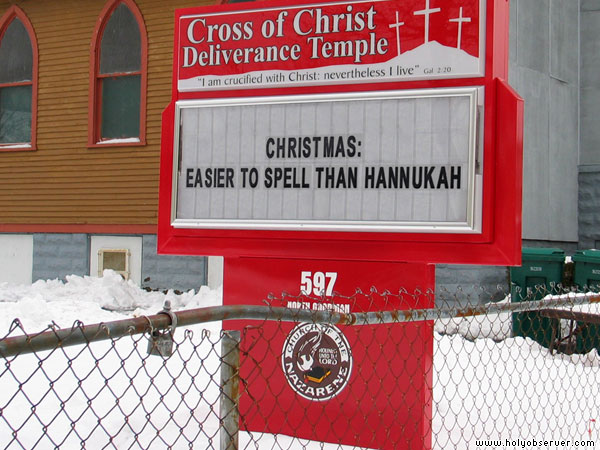
I don't know that the "Christians" at this church would agree.
In my undergraduate studies, I minored in Religion. Of the courses I took, and remember, one that stood out as being of particular importance, even sacred, to my 80+ year old professor was Sermon Preparation. He instilled the tried and true, three points and a poem (think alliteration), Baptist style of hermeneutics. At the time I thought it a little over the top, but in light of the readings, I agree that there is something substantially valuable and, in a way, sacred in the tradition of Christian exegesis.